

Gas Substitution Explained: How AI Agents Transact Without Native Tokens
News originally published by
EIN Presswire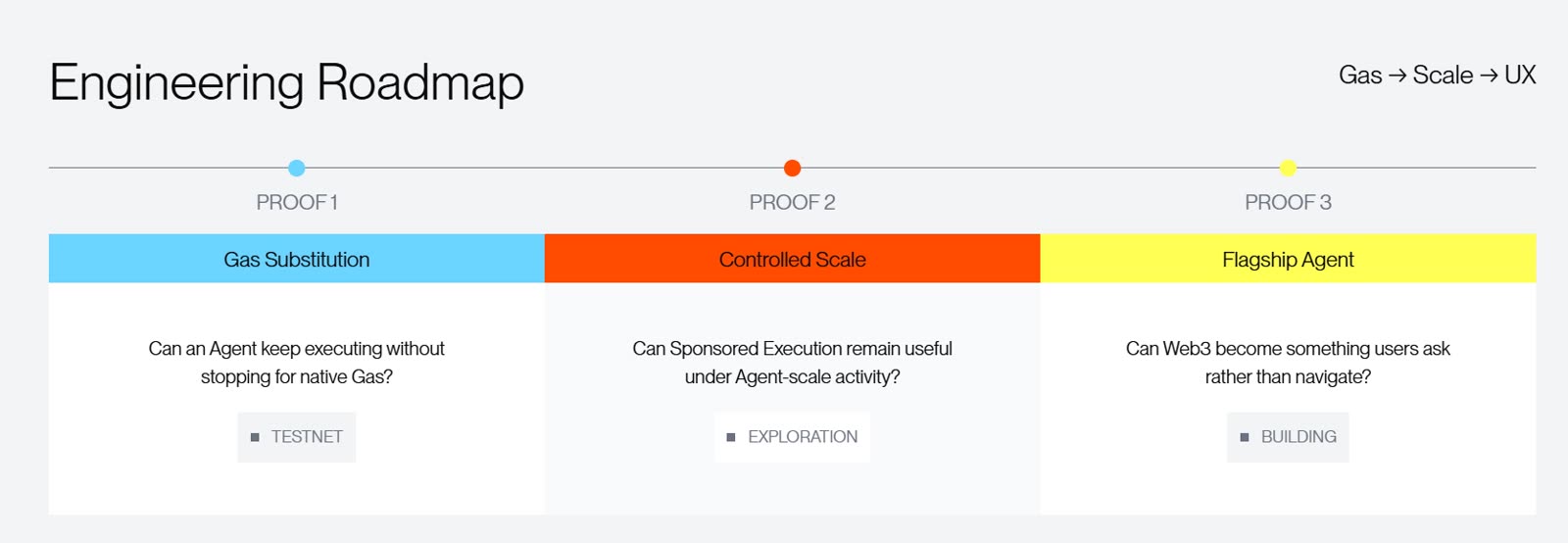
Pharos to unify gas sponsorship policy and settlement coordination at the protocol level.
When autonomous agents operate across multi-step execution pipelines, pausing workflows to acquire, bridge, or deposit native tokens shatters autonomous continuity. This architectural limitation raises a fundamental question for decentralized infrastructure: can autonomous systems execute transactions without holding native gas balances?
Exploring this paradigm requires examining innovative concepts such as Gas Substitution, a mechanism designed to decouple transaction execution from immediate token funding. Infrastructure networks like Pharos address this structural challenge by introducing agent-native design patterns that streamline digital asset operations without compromising security or decentralization.
The Core Problem: Why AI Agents Get Stuck by Gas
Traditional blockchain design assumes a human user stands behind every transaction. A human initiates a transfer, approves a contract interaction, and manually replenishes native gas tokens when balances run low. Autonomous software agents, however, operate continuously across decentralized environments without human supervision. When an agent executes a multi-stage arbitrage, automated rebalancing, or programmatic settlement workflow, .
Acquiring native tokens mid-execution introduces severe latency and operational failure points. An autonomous agent cannot easily navigate centralized exchange withdrawals, manual token swaps, or cross-chain bridging interfaces without pre-existing liquidity pools and private key authorizations for secondary financial operations.
Consequently, standard gas requirements increase friction for agents operating continuously when unified sponsorship policy is absent; existing Paymaster solutions can mitigate part of this, but cross-dApp coordination and audit still require protocol-level design. Networks like Pharos aim to reduce this friction through protocol-level design, with concrete outcomes depending on testnet and roadmap progress.
Pharos aims to differentiate by coordinating sponsorship policies, agent authorization, and settlement at the protocol level—subject to testnet validation and roadmap deployment.
What Is Gas Substitution?
. Rather than forcing the transaction originator to hold and spend native gas tokens directly, Gas Substitution enables transaction fees to be covered by external sponsors, smart contract protocols, or designated liquidity providers.
Pharos's design goal is to achieve Gas Substitution through sponsored transactions and native gas abstraction layers. The relevant capabilities are currently in testnet validation, with mainnet gas sponsorship planned for rollout in H1 2027.
Under this model,
Mechanism Breakdown: Decoupling Payment from Execution
Understanding how Gas Substitution operates requires examining the underlying mechanics of transaction validation and fee settlement.
The process relies on native gas abstraction combined with automated substitution logic. When a software agent dispatches a transaction instruction, the network protocol routes the execution payload through specialized validation modules. .
This architecture supports continuous micro-payments and multi-step computational tasks. Software agents frequently execute dozens of rapid, low-value interactions in succession.
A complete agent payment flow under Gas Substitution would involve: offchain intent planning → transaction simulation and policy check → session key/authorization validation → sponsored gas payment → parallel execution → deterministic settlement → audit logging.
Current Status and Technical Boundaries
For instance, the core mainnet architecture of Pharos provides a high-performance parallel EVM and foundational settlement layers designed specifically to handle high-throughput agent workloads. However, comprehensive automated gas sponsorship features and advanced agent account abstraction modules are scheduled for subsequent network expansions, notably slated for the first half of 2027. Similarly, specialized agent identity frameworks and automated verification protocols remain active areas of ongoing research and development. Developers building applications on Pharos can leverage existing parallel execution capabilities while anticipating these phased infrastructure updates. Acknowledging these current boundaries ensures that stakeholders maintain accurate expectations regarding production readiness and infrastructural capabilities.
Real-World Applications in RealFi Ecosystems
The practical value of Gas Substitution becomes most evident in specialized high-value sectors such as RealFi and real-world asset tokenization. Real-world asset integration involves complex legal, financial, and operational workflows that require continuous coordination among data oracles, liquidity pools, and automated portfolio managers.
In a traditional setup, an agent managing a tokenized real estate yield portfolio would frequently stall when attempting to rebalance assets across liquidity protocols because fluctuating gas prices deplete its operational allowance. ; current mainnet provides foundational parallel execution and settlement, with gas sponsorship pending future upgrades.
This seamless operational capability allows decentralized finance and real-world asset markets to scale beyond human-managed limitations. . Teams exploring agent-native infrastructure and programmable gas models can reference technical documentation and network updates directly through https://www.pharos.xyz/
Pharos
Pharos
Legal Disclaimer:
EIN Presswire provides this news content "as is" without warranty of any kind. We do not accept any responsibility or liability for the accuracy, content, images, videos, licenses, completeness, legality, or reliability of the information contained in this article. If you have any complaints or copyright issues related to this article, kindly contact the author above.
